Gonzalo Torras Serrano

AI researcher in the making.

Advanced Master of Artificial Intelligence, KU Leuven, 2026–2027.

Gonzalo Torras Serrano
Thesis
10/10, Research Track
IDavinci 2025
1st place, 72-hour hackathon
FreeMove
Best project award, UFV
Languages
Spanish, English (C1), French (B2, DELF)
Based in
Leuven, Belgium

I work on AI systems that combine deterministic and non-deterministic methods: neural models for language and perception, deterministic planning on top, and everything running on the device so no data has to leave it.

From Madrid. Living in Leuven.

Research first.

Studying and researching AI is what I am here for. My thesis grew into a paper that is still in progress, and it is the reason I chose an advanced, research-oriented master's. The projects further down this page are real and I am proud of them, but they are how I pay for the studies and keep a normal life, not the other way round.

I care about privacy in a practical way. I am working towards data sovereignty, for myself and for the people I build for: local models where they are good enough, self-hosted services where a SaaS is not necessary, and data that stays inside the European Union. In my free time I am usually tinkering with the homelab.

Final Degree Project

  1. Voice
  2. Intent
  3. Plan
  4. Act
  5. Verify

Autopilot, my thesis: one voice command, one deterministic plan, no data leaving the machine.

Autopilot: On-Device AI Desktop Agent for Hands-Free and Accessible Windows Automation

  • Gonzalo Torras Serrano
  • Supervisor: Dr. Moisés Martínez Muñoz
  • Universidad Francisco de Vitoria · Computer Science · Research Track
  • Graded 10/10 · 2026

Abstract

Autopilot takes a single voice command and carries out the requested Windows task end to end on the local device, so that people with limited motor function can operate a computer by voice alone: no further intervention, no internet connection and no data leaving the machine. It combines deterministic and non-deterministic AI. A local speech model transcribes the command; a language model extracts the intent and its parameters; a deterministic planner (PDDL, Fast Downward) produces an explainable plan; specialised vision-language agents execute it against the real graphical interface through visual grounding, mouse and keyboard; and a verification agent confirms completion without human supervision.

Results

Evaluated on seven task templates across 21 runs and compared with five alternative desktop-automation approaches, Autopilot reached a 100% task success rate with zero planning failures and zero data exposure, outperforming every alternative in autonomy, execution accuracy and privacy.

100%
task success
21
runs, 7 task templates
0
planning failures
0
bytes leaving the device

It beat Claude, Gemini, OpenClaw and Windows Voice Access.

Same seven task templates, three runs each, no human help. Autopilot was the only system that completed every task autonomously while keeping every byte on the machine.

  • Claude Cowork
    Claude Sonnet 4.6
  • Gemini Computer Use
    Gemini 3.5 Flash, model-requested screenshots
  • Gemini, screenshot-assisted
    Gemini 3.5 Flash, screenshots supplied after each action

  • OpenClaw
    Open-source local computer-use agent
  • Windows Voice Access
    Built-in Windows 11 voice control

Keywords

  • Artificial intelligence
  • Speech-to-text
  • Vision-language models
  • Automated planning
  • Desktop automation
  • Accessibility
  • On-device AI

The full report and the code are not public yet: the work is being turned into a paper. If you would like the details, write to me.

Ask about Autopilot

Studies

  • 2026 – 2027

    Advanced Master of Artificial Intelligence

    KU Leuven, Belgium

    One-year advanced master's (60 ECTS), Engineering and Computer Science track: machine learning and neural networks, knowledge representation, search and planning, computer vision, natural language processing, AI ethics and a research thesis.

  • 2022 – 2026

    Computer Science, BSc in Engineering

    Universidad Francisco de Vitoria, Madrid

    Entry excellence scholarship. Cybersecurity specialisation. Thesis graded 10/10.

  • Sep 2024 – Jan 2025

    Erasmus exchange

    Université Gustave Eiffel, Paris

    Systems programming in C and Java. DELF B2 in French.

From first year to Leuven

The big projects are shown as ranges, the small ones as a single date.

  1. Sep 2022

    Start at UFV, Computer Science

    Entry scholarship for excellence.

  2. 2024

    Tetris in Z80 assembly

    A playable ZX Spectrum game, second year.

  3. Sep 2024 – Jan 2025

    Erasmus in Paris, Université Gustave Eiffel

    Quadtree image compression in C, Cascadia in Java, DELF B2.

  4. Feb 2025 – Jun 2026

    Internship at Minsait (Indra), cybersecurity

    Vulnerability analysis and compliance with Python and Power BI, Docker and Kubernetes clusters. Not an AI role, but I brought the AI mindset with me: I built a dataset of vulnerabilities to predict how long each one takes to mitigate.

  5. 2025

    FreeMove wins best project

    Accessible metro navigation for Madrid.

  6. 2025

    1st place at IDavinci 2025

    A recipe chatbot for Babel, working prototype in 72 hours.

  7. Jul 2025

    NLU/NER assistant for Splendom Suites

    First work with Splendom, internal use only: RoBERTa fine-tuned for real-estate queries, F1 0.92.

  8. Jan 2026 – Jul 2026

    Thesis: Autopilot

    On-device desktop agent for hands-free Windows. Graded 10/10; paper in progress.

  9. Apr 2026

    SecureBox

    Hybrid encryption and signatures, CLI.

  10. Jun 2026 – Aug 2026

    Splendom: Hermes, splendomsuites.com, splendomoutpost.com

    An internal agent connected to the whole company, plus the public websites.

  11. Jul 2026 – now

    Psychology Clinic: clinical CRM

    Self-hosted in the EU. Still evolving. Name withheld for security.

    ongoing
  12. Jul 2026

    Graduated in Computer Science

    Universidad Francisco de Vitoria.

  13. Aug 2026 – now

    DeRetiro and PalomIA

    A website that keeps itself up to date.

  14. Sep 2026 – Jul 2027

    Advanced Master of AI, KU Leuven

    Moved to Belgium.

Projects

Three kinds of work. Pick one.

Real systems built for a company, a clinic and a non-profit website, then made fully autonomous.

Splendom · Psychology Clinic · DeRetiro

Ask about a project

Three real systems for three real organisations. The pattern is the same each time: build the system, then make it fully autonomous.

Splendom

An agent that acts as the company's brain

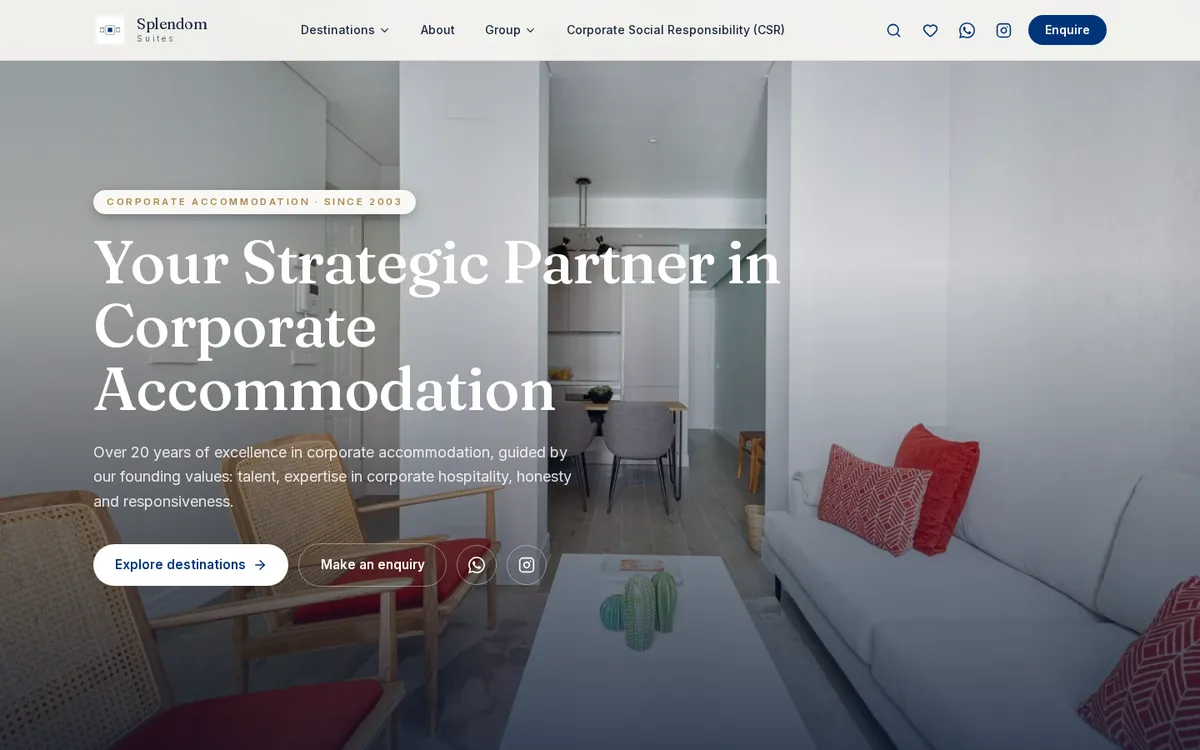
Splendom Suites is a corporate-accommodation company in Madrid. My first work with them was an assistant for internal use only, for the sales team: 30+ Word documents and several spreadsheets of apartment data, turned into a single conversational interface. The first version leaned on a cloud LLM (Llama 3 70B) and invented amenities.

So I rebuilt it as an NLU/NER pipeline: RoBERTa fine-tuned to classify the intent of each query and to extract addresses, unit types and 50+ amenities (F1 0.92), a synthetic-data pipeline that grew 400 real descriptions into 10,000 training examples, deterministic filtering over a JSON inventory (no hallucinations by construction) and CPU inference on an 8 GB server so nothing leaves the company.

Then the company started growing fast, and a chatbot that only answers questions about apartments stops being enough: every new need (the mailbox, the spreadsheets, the websites) would have meant another model and another integration. It made more sense to move to Hermes, an open-source agent, again for internal use only, that I connected to the whole company: the websites, the mailbox, Drive and Sheets, the internal Kanban board and the single sign-on. It maintains the websites on its own (a new apartment goes live from a spreadsheet row), helps with marketing and new ideas, and works day to day next to the staff: it receives tasks by email or on the board, does them, assigns work and reports back with a single email.

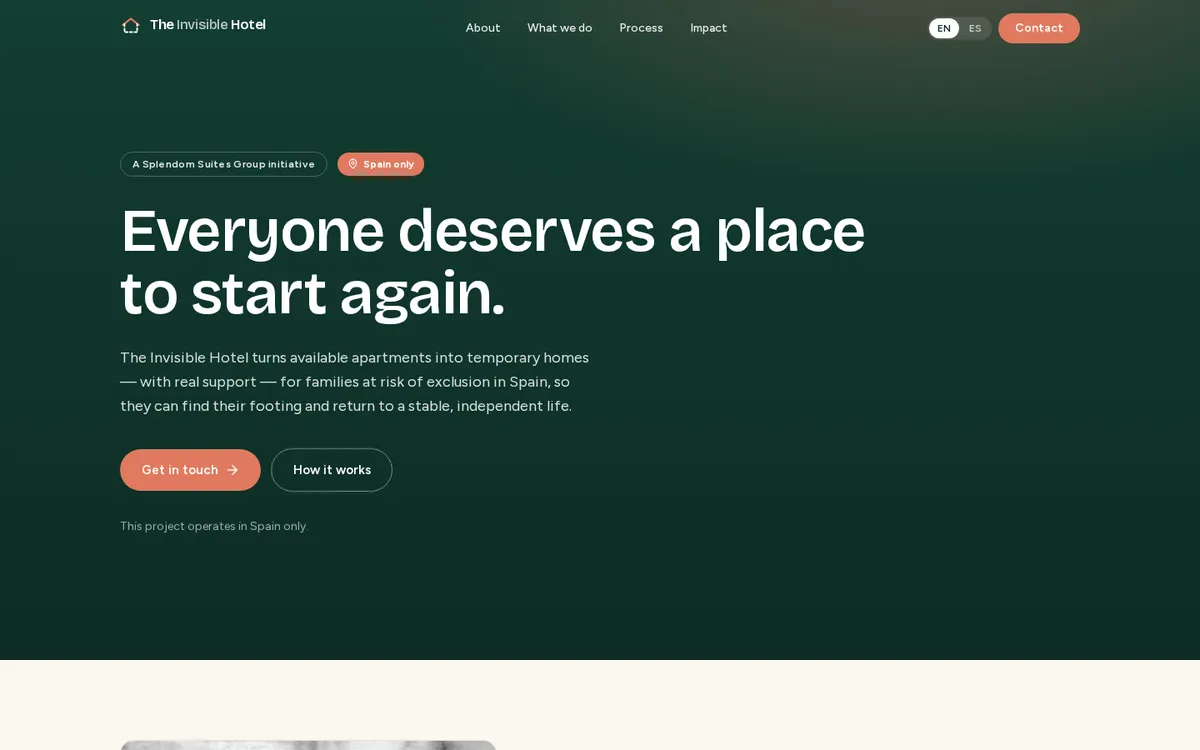
Along the way I built the group's public websites: splendomsuites.com with 400+ apartments, splendomoutpost.com for the B2B side and elhotelinvisible.es, the group's social project.

The result: nobody at Splendom needs to be dedicated to the website any more. Hermes does that job on its own, and quite a few others.

  • NLU / NER
  • Next.js
  • AI agent
  • Kanban integration
  • Native integration
  • Email gateway
PalomIA

DeRetiro

A website that keeps itself up to date

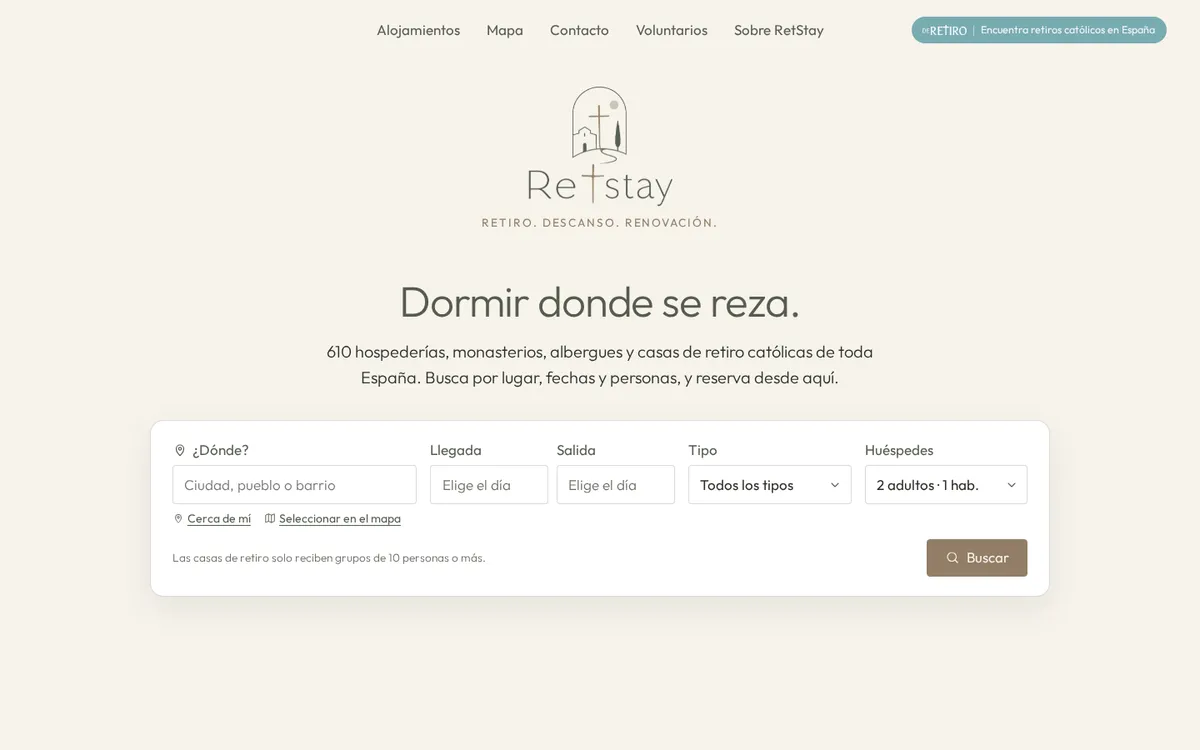
deretiro.es lists Catholic retreats, parishes and retreat houses across Spain: more than a thousand retreats and hundreds of parishes gathered from many separate, scattered websites, where the information was never in one place, and normalised, with sister sites in German and Italian and RetStay, a booking site for 600+ retreat houses.

Rebuilding the site was the easy part. The real work is PalomIA: a process that combines AI with deterministic rules so the site updates itself. It discovers retreats in different sources, extracts and validates them under strict rules (dates, parish, title), publishes automatically several times a day and sends anything doubtful to a human review queue. It also completes what is already published and is connected to the parishes' mailbox, which it reads but never writes to.

The site grows every day without anyone editing it.

  • Next.js
  • Pipelines
  • LLM + rules
  • Human in the loop
  • Chatbot

Psychology Clinic

A clinical CRM that keeps its data in the EU

Psychology Clinic is a psychology practice in Madrid (its real name is withheld for security reasons, as agreed with them). I am building and maintaining its management platform: patient records and couple or family cases, an agenda that knows the clinic's rules, session notes, a ledger of charges and payments, an email client synced with the clinic's own mailbox, video sessions, informed consent with electronic signature, automatic reminders, roles and permissions, and an audit trail.

What used to be done by hand now runs on its own: appointment reminders, consent flows, mail sync, session bookkeeping, informative meetings for new patients.

Everything is self-hosted on servers inside the European Union. No third-party SaaS ever sees a patient's data.

The code is not public, for data-protection reasons.

  • Next.js
  • PostgreSQL
  • IMAP / SMTP
  • Video sessions
  • E-signature
  • GDPR

Write to me

For research, a training session or anything else. Messages go straight to my inbox and I reply from it.

Or find me on

Gonzalo Torras · AI researcher in the making